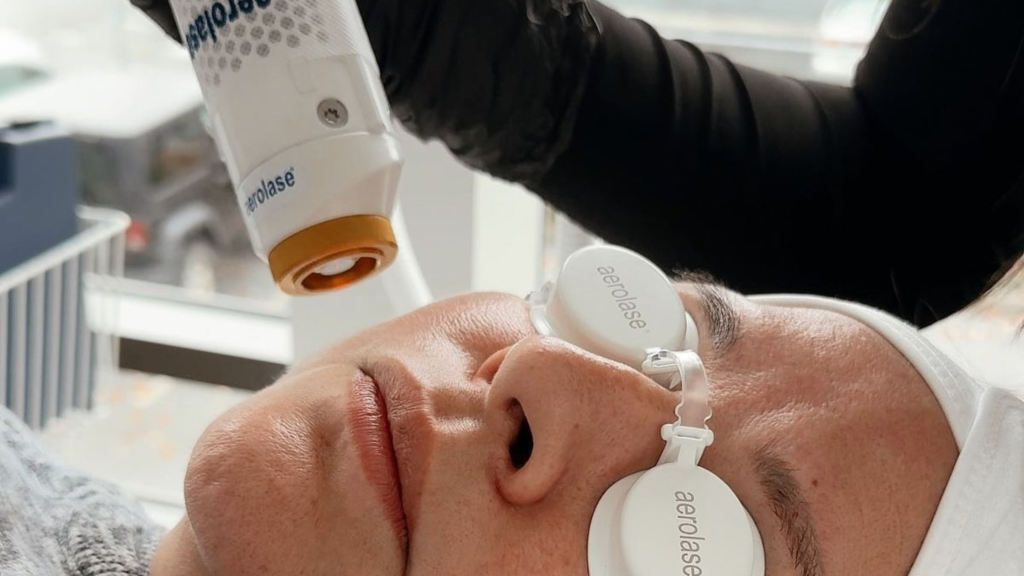
When patients search for Aerolase vs. Microneedling in Reno, they are usually not asking a simple question. They are really asking:
“Which treatment is right for my skin?”
That is the better question.
Aerolase and microneedling are both popular treatments for improving skin quality, texture, acne scars, pores, dullness, collagen support, and overall rejuvenation. But they are not the same treatment. They work in very different ways, they target different layers of the skin, and they are often best for different concerns.
At Bella Derma Skin Care Solutions in Reno, we believe the best aesthetic results come from choosing the right tool for the right concern—not simply choosing the trendiest treatment. Some patients need laser therapy first. Some need microneedling. Some benefit from both in a strategic sequence.
This guide explains the difference between Aerolase vs. Microneedling in Reno, including how each treatment works, which concerns each treatment is best suited for, when one may be preferred over the other, and why a customized treatment plan matters.
Aerolase Neo Elite uses a 1064nm Nd:YAG laser with 650-microsecond technology and is promoted for concerns such as acne, melasma, rosacea, aging skin, and more. Microneedling, by contrast, uses controlled micro-injuries to stimulate the body’s natural healing and collagen response, and the FDA notes that cleared microneedling devices may be used to improve the appearance of facial acne scars, facial wrinkles, and abdominal scars in adults 22 and older.
Both can be excellent. The key is knowing when each one makes the most sense.
What Is Aerolase?
Aerolase is an advanced laser treatment that uses light energy to target specific concerns in the skin. The Aerolase Neo Elite is known for its 650-microsecond pulse technology and 1064nm wavelength, which allows it to address a wide variety of concerns while remaining comfortable and versatile for many skin types.
At Bella Derma, Aerolase is often considered for concerns such as:
Acne
Redness
Rosacea-prone skin
Pigmentation irregularities
Melasma-prone skin
Uneven tone
Dullness
Enlarged-looking pores
Skin rejuvenation
Unwanted facial or body hair
Inflammation-related skin concerns
Overall skin clarity
The important distinction is that Aerolase does not create open channels in the skin the way microneedling does. It uses laser energy to target concerns beneath the surface without the same type of mechanical skin puncture.
That makes Aerolase especially appealing for patients who want a treatment that can improve tone, redness, acne activity, inflammation, and overall skin clarity with relatively minimal disruption to daily life.
What Is Microneedling?
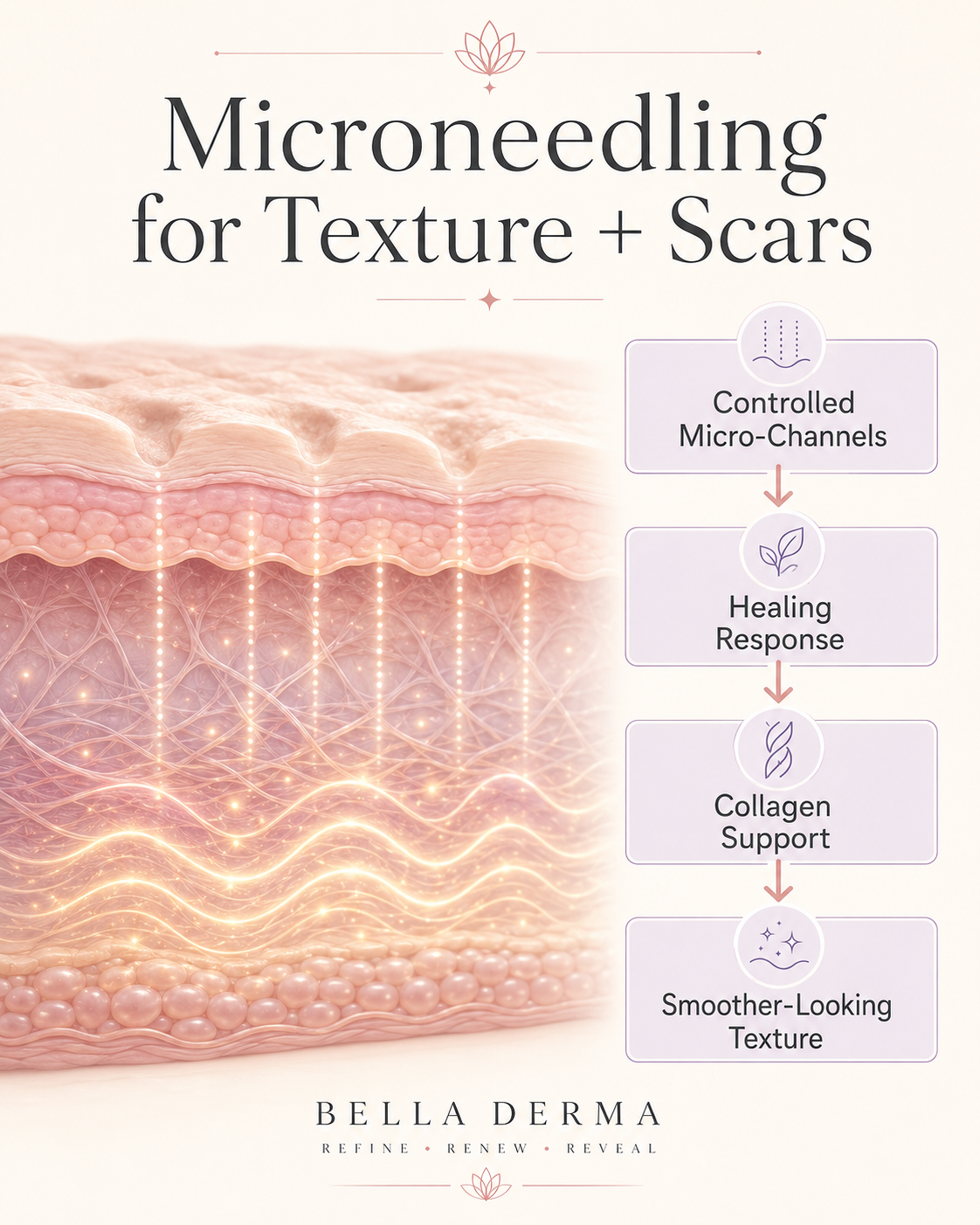
Microneedling is also called collagen induction therapy. It uses fine needles to create controlled micro-injuries in the skin. These micro-injuries trigger a healing response that can support collagen and elastin remodeling over time.
The American Academy of Dermatology explains that microneedling results appear gradually as the body produces collagen, and many patients need a series of treatments for optimal improvement. The FDA also provides patient education on FDA-cleared microneedling devices, including potential benefits, risks, and safety considerations. For acne scars, the AAD notes that treatment plans may involve 3 to 5 sessions performed every 2 to 4 weeks, with studies showing acne scar improvement in the 50% to 70% range.
Microneedling is often considered for:
Acne scars
Texture irregularities
Fine lines
Enlarged-looking pores
Mild laxity
Skin roughness
Collagen support
Stretch marks
Certain types of scarring
Overall skin remodeling
Microneedling is often strongest when the primary concern is texture—especially when the skin has shallow acne scars, roughness, or early collagen loss.
However, microneedling is not always the best first treatment for active acne, redness, heat-prone skin, or inflamed skin. In those cases, calming and correcting the skin environment first may be a better strategy.
That is where Aerolase can become especially valuable.
Aerolase vs. Microneedling in Reno: The Simple Difference
The simplest way to understand Aerolase vs. Microneedling in Reno is this:
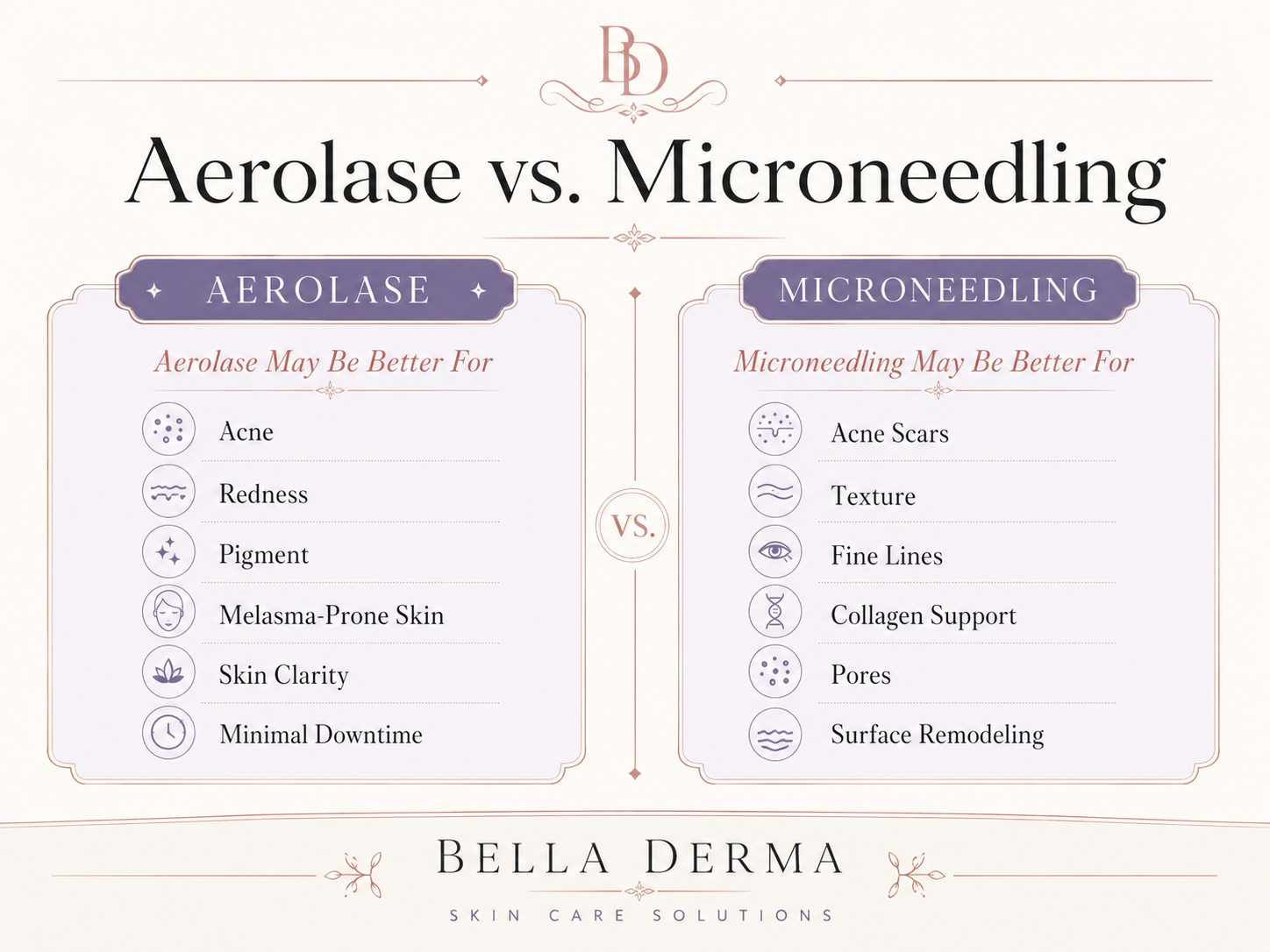
Aerolase is often better for active inflammation, redness, acne, pigment, tone, and overall clarity.
Microneedling is often better for collagen remodeling, acne scars, fine texture, and surface irregularity.
Aerolase works through laser energy. Microneedling works through controlled mechanical micro-injury.
Aerolase can be a strong option when the skin needs to calm down, clear up, or even out. Microneedling can be a strong option when the skin needs remodeling, smoothing, and collagen stimulation.
They are not enemies. They are different tools.
In many cases, the most advanced answer is not “Aerolase or microneedling.” It is:
Which one should come first?
How should they be spaced?
What is the patient’s skin actually ready for?
Are we treating active breakouts, post-acne discoloration, true scarring, redness, texture, or all of the above?
That is why a consultation matters.
Quick Comparison: Aerolase vs. Microneedling
| Concern | Aerolase May Be Better For | Microneedling May Be Better For |
|---|---|---|
| Active acne | Often a strong choice | Usually not first if acne is active/inflamed |
| Acne scars | May help support a broader plan | Often a strong choice for texture/scarring |
| Redness/rosacea-prone skin | Often a strong choice | May be too stimulating for some redness-prone skin |
| Melasma/pigment concerns | Often considered carefully | Can be considered carefully, but must avoid irritation |
| Enlarged-looking pores | Can help improve clarity and oil-related appearance | Can help improve texture and collagen support |
| Fine lines | Can support rejuvenation | Often strong for collagen remodeling |
| Downtime preference | Often minimal downtime | More visible short-term redness is common |
| Skin that feels inflamed | Often useful as a calming first step | May not be ideal first step |
| Collagen remodeling | Helpful, depending on protocol | One of its core strengths |
1. Aerolase May Be Better When Acne Is Still Active
One of the biggest mistakes patients make is trying to treat acne scars before acne is controlled.
If the skin is still actively breaking out, inflamed, oily, congested, or irritated, aggressive resurfacing or microneedling may not be the best first step. The skin may need to be calmed and stabilized first.
Aerolase can be especially useful in acne-focused treatment plans because it may help address inflammation, visible redness, and active acne-related concerns while supporting a clearer skin environment. Aerolase describes the Neo Elite as a treatment option for acne, redness, melasma, aging skin, and more.
This is important for Reno patients because many people here are dealing with a combination of acne, dryness, irritation, sun exposure, and barrier sensitivity from the high-desert climate.
When someone has active acne and early scarring, the best sequence may be:
Control active acne
Calm inflammation
Reduce redness and discoloration
Support the skin barrier
Then begin deeper collagen remodeling if needed
That is why Aerolase vs. Microneedling in Reno is not always a one-treatment answer. Patients who are comparing options can also learn more in our guide to Aerolase laser treatment in Reno. Sometimes Aerolase prepares the skin for microneedling later.
2. Microneedling May Be Better for True Texture and Acne Scars
Microneedling has a strong role in treating certain types of acne scarring, especially shallow rolling scars, mild boxcar scars, rough texture, and early collagen loss.
Microneedling works by creating controlled micro-channels in the skin, which stimulates the wound-healing process and supports collagen production. A dermatology review describes microneedling as a procedure that creates controlled micro-injuries to stimulate healing and increased collagen production.
This makes microneedling especially useful when the concern is not active acne, but what acne left behind.
Examples include:
Indented acne scars
Uneven texture
Rough skin surface
Enlarged-looking pores
Post-acne texture changes
Fine creases
Mild collagen loss
However, microneedling is not instant. Results build over time. The AAD notes that microneedling improvement appears gradually as collagen is produced, and full results may take several months.
That matters because patients sometimes expect one microneedling treatment to erase years of acne scarring. In reality, acne scar remodeling usually requires a series and a long-term plan.
3. Aerolase May Be Better for Redness and Rosacea-Prone Skin
For patients with facial redness, flushing, visible irritation, or rosacea-prone skin, Aerolase may be a better first conversation than microneedling.
Why?
Because redness-prone skin is often reactive. It may not tolerate aggressive stimulation well at first. Microneedling creates controlled inflammation by design. That can be helpful for collagen remodeling, but it may not be the best first move if the skin is already inflamed.
Aerolase laser therapy can be used in treatment plans for rosacea and redness-related concerns. Aerolase describes Neo Elite as addressing rosacea, acne, melasma, aging skin, and other concerns.
This does not mean microneedling is never appropriate for redness-prone patients. It means the timing matters.
For example, a patient with redness plus acne scars may benefit from:
Aerolase first to reduce visible redness and calm the skin
Medical-grade skincare to support the barrier
Microneedling later for texture once the skin is stable
That type of strategy is more thoughtful than jumping straight into collagen induction therapy on skin that is already irritated.
4. Aerolase May Be Better for Pigment, Melasma-Prone Skin, and Uneven Tone
Pigment concerns require caution.
Melasma, post-inflammatory hyperpigmentation, and uneven tone can be frustrating because they often worsen when the skin is overheated, irritated, or inflamed. That is why treatment selection matters so much.
Aerolase is frequently discussed as a treatment option for melasma and hyperpigmentation concerns. Its 1064nm laser platform is also discussed in dermatology-focused literature as a treatment option for melasma, post-inflammatory hyperpigmentation, acne-related concerns, and aging skin.
Microneedling can also be used in pigment-focused treatment plans, but it must be done carefully. The FDA lists pigmentation changes, including hyperpigmentation or hypopigmentation, as less common risks of microneedling devices.
This is especially important in Reno, where sun exposure can complicate pigment concerns. A patient who receives microneedling or laser treatment but does not protect the skin afterward may be more likely to experience pigment rebound or uneven results.
For pigment-prone patients, the treatment plan should usually include:
Careful consultation
Skin type assessment
Sun exposure discussion
Pre-treatment skincare when appropriate
Strict post-treatment SPF habits
A conservative treatment sequence
For many patients, Aerolase may be a smart first step when the priority is tone, redness, pigment, and inflammation control. Microneedling may be added later if texture or scarring remains.
5. Microneedling May Be Better for Collagen Induction
When the primary goal is collagen remodeling, microneedling deserves attention.
Patients who want to understand this option more deeply can learn about microneedling and collagen support at Bella Derma.
Microneedling is often chosen for patients who want to improve:
Fine lines
Skin texture
Shallow scarring
Early crepiness
Mild laxity
Pore appearance
Overall smoothness
Because microneedling creates controlled micro-injuries, the skin responds by repairing and remodeling itself. This collagen-building process is gradual, which is why results continue to develop over weeks to months.
In the Aerolase vs. Microneedling in Reno conversation, microneedling often wins when the skin is calm, acne is controlled, and the patient’s main concern is texture or collagen support.
But it is not always the right first move.
If the patient has active acne, inflamed breakouts, irritated skin, redness, or an impaired skin barrier, Bella Derma may recommend stabilizing the skin before moving into deeper remodeling.
The best collagen treatment is not always the strongest treatment. It is the treatment the skin is ready to heal from well.
6. Aerolase Often Has Less Social Downtime
One reason many patients love Aerolase is that it can often fit more easily into real life.
Many patients return to normal activities quickly after Aerolase. Depending on the concern being treated and the protocol used, the skin may look a little pink or warm temporarily, but it generally does not create the same visible post-treatment appearance as microneedling.
Microneedling, on the other hand, commonly causes visible redness and sensitivity afterward. The FDA notes that common microneedling effects may include redness, dryness, tightness, peeling, discomfort, bruising, bleeding, and crusting. The FDA lists common microneedling effects such as redness, dryness, roughness, tightness, itching, peeling, discomfort, burning, bruising, bleeding, and crusting.
That does not make microneedling bad. It simply means patients should plan accordingly.
If someone has an event, photoshoot, wedding, work presentation, or weekend trip, Aerolase may be easier to schedule closer to everyday life. Microneedling usually requires more planning because the skin needs time to recover.
For Reno patients with busy schedules, this matters.
Aerolase may be easier before a normal workweek.
Microneedling may be better when the patient can allow visible redness and recovery time.
Combination plans should be scheduled strategically, especially before major events.
7. Aerolase and Microneedling Can Work Beautifully Together
One of the most important things to understand about Aerolase vs. Microneedling in Reno is that the treatments can be complementary.
For acne-prone or scar-prone patients, Aerolase may help improve the overall skin environment before microneedling. Aerolase has discussed protocols where Neo Elite is used before microneedling to reduce active acne, inflammation, and discoloration while preparing the skin for additional collagen remodeling.
A strategic combined plan may look like this:
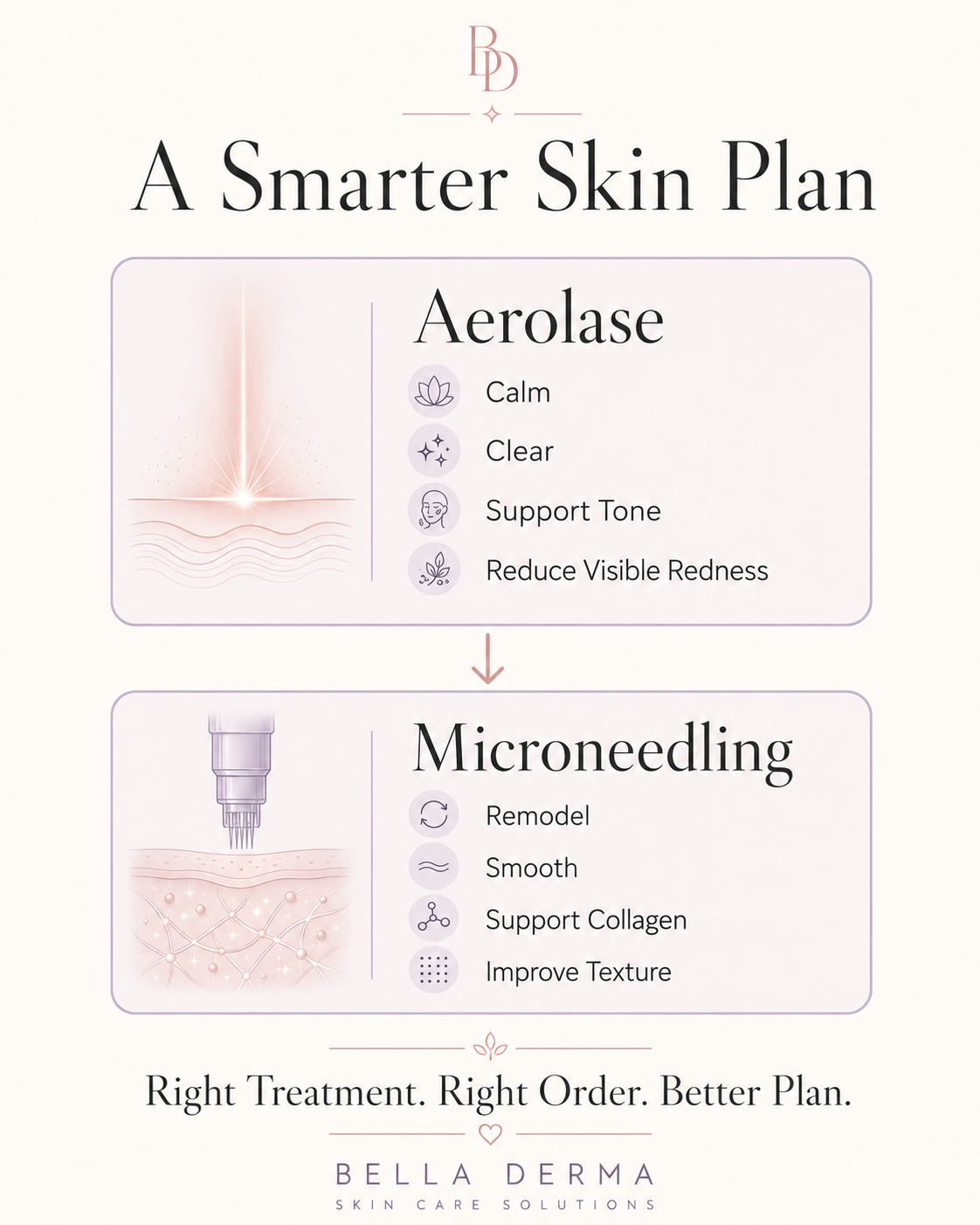
Aerolase to calm acne, redness, pigment, and inflammation
Medical-grade skincare to support the barrier
Microneedling to remodel scars and texture
Aerolase maintenance for clarity and tone
Ongoing skincare to protect the result
This can be especially helpful for patients who have more than one concern. Many people do not have “just acne scars” or “just redness.” They have a blend of:
Active acne
Old acne marks
Indented scars
Redness
Uneven tone
Texture changes
Pore visibility
Dullness
Sun damage
A single treatment may not address all of that. A customized plan can.
8. Microneedling Is Not the Same as RF Microneedling
This is an important distinction.
Traditional microneedling uses needles to create controlled micro-injuries. RF microneedling combines microneedling with radiofrequency energy. These are not the same treatment.
RF microneedling can be powerful, but it also requires careful patient selection and skilled technique. In 2025, the FDA issued safety information noting reports of serious complications with RF microneedling, including burns, scarring, fat loss, disfigurement, and nerve damage.
That does not mean RF microneedling is never appropriate. It means patients should understand what they are receiving and why.
When comparing Aerolase vs. Microneedling in Reno, make sure you know whether the conversation is about:
Traditional microneedling
Microneedling with PRP or exosomes
RF microneedling
Laser treatment
Laser plus microneedling combination therapy
These treatments have different mechanisms, risks, downtime, and best-use cases.
At Bella Derma, the goal is not to chase every trend. The goal is to match the treatment to the patient’s skin, concern, tolerance, timeline, and desired outcome.
9. The Best Choice Depends on the Diagnosis, Not the Device
Patients often come in asking for a specific treatment because they saw it online.
“I think I need microneedling.”
“I heard Aerolase is amazing.”
“My friend did laser.”
“Someone told me I need collagen.”
“I have acne scars, so I need microneedling.”
Sometimes they are right. Sometimes they are only partly right.
The most important step is diagnosing what is actually happening in the skin.
Is the concern active acne?
Post-inflammatory redness?
Brown pigmentation?
True indented scarring?
Enlarged pores?
Oiliness?
Crepey texture?
Sun damage?
Rosacea-prone flushing?
Barrier damage?
Aging-related collagen loss?
Aerolase may be better for some of those. Microneedling may be better for others. A combination may be best when multiple concerns are present.
This is where provider skill matters.
The best treatment plan is not based on a menu. It is based on evaluation.
Aerolase vs. Microneedling for Acne
For active acne, Aerolase is often the better starting point.

Microneedling is generally not the first choice when acne is inflamed or active because creating microchannels in irritated skin may not be ideal. Active breakouts should usually be controlled before scar remodeling begins.
For acne-prone patients, a customized plan may also include the Face Reality acne program in Reno to support clearer skin between treatments.
Aerolase may be useful when the goals include:
Reducing active acne appearance
Calming visible inflammation
Supporting clearer-looking skin
Addressing redness and post-acne discoloration
Preparing the skin for future scar treatments
Microneedling may become helpful later if the acne is controlled and the remaining concern is scarring or texture.
Best general sequence:
Aerolase first
Acne-safe skincare plan
Breakout control
Then microneedling for scars if needed
Aerolase vs. Microneedling for Acne Scars
For acne scars, the answer depends on whether the scars are truly scars or mostly discoloration.
Many patients call every post-acne mark a “scar,” but there are different issues:
Red marks
Brown marks
Indented scars
Rough texture
Large-looking pores
Active acne bumps
Inflammation
Aerolase may be better for redness, discoloration, inflammation, and overall clarity.
Microneedling may be better for indented texture, collagen remodeling, and shallow acne scars.
A patient with both discoloration and scars may need both treatments. Learn how Bella Derma separates discoloration from structural scarring in our guide to Acne Scar Treatment in Reno. Aerolase can help improve the skin environment, while microneedling can help remodel texture over time.
That is a stronger strategy than treating all acne marks the same way.
Aerolase vs. Microneedling for Redness
For redness, Aerolase often makes more sense as the first treatment conversation.
Redness-prone skin is usually reactive. It may flush easily, sting with products, or become irritated with aggressive treatments.
Microneedling may be too stimulating for certain patients if the skin is inflamed, reactive, or barrier-compromised.
Aerolase may be preferred when the goals include:
Reducing visible redness
Calming the appearance of inflammation
Supporting rosacea-prone skin
Improving tone without aggressive resurfacing
Treating skin that is not ready for microneedling
Once the redness is better controlled, microneedling may be considered for texture if needed.
Aerolase vs. Microneedling for Melasma and Pigment
Melasma requires caution because heat, inflammation, sun exposure, and irritation can worsen pigment in some patients.
Aerolase may be considered for pigment concerns because it can be used in protocols for melasma, hyperpigmentation, and uneven tone.
Microneedling may also be used in certain pigment plans, but it should be approached carefully. Since the FDA lists pigment changes as a less common risk of microneedling devices, patient selection and aftercare are important.
For pigment-prone skin, the plan should usually include:
Daily sunscreen
Avoiding unnecessary heat exposure
Barrier-supportive skincare
A conservative treatment approach
Careful spacing between treatments
Avoiding aggressive at-home actives right after treatment

For Reno patients, this is especially important because high-desert sun exposure can challenge pigment correction.
Aerolase vs. Microneedling for Pores
Both treatments may help improve the appearance of pores, but in different ways.
Aerolase may help when pores look more noticeable because of oiliness, congestion, inflammation, or uneven tone.
Microneedling may help when pores appear more visible because of texture changes, collagen loss, or rough skin quality.
For many patients, pore improvement is best achieved through a combination of:
Professional treatments
Consistent skincare
Retinoid or exfoliant strategy when appropriate
Oil control
Sun protection
Collagen support
Hydration and barrier repair
No treatment permanently “erases” pores. The goal is to make the skin look smoother, healthier, clearer, and more refined.
Aerolase vs. Microneedling for Fine Lines
For fine lines, microneedling is often a strong option because it stimulates collagen remodeling.
Aerolase can also support skin rejuvenation and overall tone, but microneedling may be preferred when the main issue is fine creasing, early collagen loss, and texture.
That said, fine lines can come from different causes:
Muscle movement
Volume loss
Dryness
Sun damage
Skin thinning
Collagen loss
Crepey texture
If the line is movement-related, Botox may be the better tool.
If the line is textural, microneedling may help.
If the skin has redness, pigment, and dullness, Aerolase may help.
If the concern is volume loss, filler or biostimulatory support may be more appropriate.
Again, the diagnosis matters.
Who May Prefer Aerolase?
Aerolase may be a strong choice for patients who want to address:
Active acne
Redness
Rosacea-prone skin
Melasma-prone skin
Pigment irregularities
Uneven tone
Dullness
Inflammation
Mild rejuvenation
Hair reduction
Skin clarity with minimal social downtime
It may also be appealing for patients who are nervous about needles, downtime, or aggressive procedures.
Aerolase may be a good starting point when the skin needs to calm, clear, and stabilize before deeper remodeling.
Who May Prefer Microneedling?
Microneedling may be a strong choice for patients who want to address:
Acne scars
Fine lines
Texture
Roughness
Mild laxity
Collagen support
Enlarged-looking pores
Surface irregularity
Early signs of aging
Microneedling may be especially useful when acne is controlled and the primary concern is the leftover texture.
It is usually best for patients who understand that results are gradual and that a series is often needed.
Who May Need Both?
Many patients benefit from both Aerolase and microneedling because many skin concerns overlap.
A combined plan may be ideal for someone with:
Acne plus acne scars
Redness plus texture
Pigment plus pores
Dullness plus scarring
Inflammation plus collagen loss
Melasma-prone skin plus uneven texture
Post-acne marks plus shallow scars
Aerolase may help create a healthier-looking, calmer skin environment. Microneedling may then help remodel texture and collagen.
This is often the most sophisticated answer to Aerolase vs. Microneedling in Reno.
Not one or the other.
The right order.
Why Reno Patients Need a Customized Skin Plan
Reno’s high-desert environment can be tough on skin.
Many patients experience:
Dryness
Dehydration
Sun exposure
Wind exposure
Barrier sensitivity
Pigmentation concerns
Redness
Seasonal irritation
Post-treatment dryness
This matters because both Aerolase and microneedling require good aftercare.
Even a great treatment can underperform if the skin barrier is not supported, sunscreen is inconsistent, or the patient uses harsh products too soon after treatment.
At Bella Derma, treatment planning considers not only the skin concern but also the patient’s lifestyle, timeline, climate exposure, skincare routine, and healing capacity.
That is one of the biggest differences between a basic treatment menu and a true skin strategy.
What to Expect With Aerolase
Aerolase treatments are generally comfortable and efficient. Depending on the treatment area and goal, the appointment may involve cleansing the skin, performing the laser treatment, applying supportive skincare, and reviewing aftercare.
Patients may notice temporary warmth, mild redness, or a refreshed glow. The specific response depends on the treatment settings, condition being treated, and individual skin sensitivity.
Aerolase is often performed in a series. The number of treatments depends on the concern. Acne, redness, melasma, rejuvenation, and hair reduction may all require different treatment plans.
Best for patients who want:
A refined, non-aggressive approach
A treatment that can address multiple concerns
Minimal social downtime
Support for acne, redness, pigment, or overall clarity
A series-based skin improvement plan
What to Expect With Microneedling
Microneedling usually involves cleansing the skin, applying numbing cream, performing the treatment with a microneedling device, and applying post-treatment products.
Afterward, the skin may look red, feel tight, or resemble a sunburn. Some patients experience dryness, flaking, sensitivity, or roughness during the healing phase. The FDA lists common expected effects such as redness, tightness, dryness, peeling, discomfort, bruising, and crusting.
Microneedling results are gradual. The collagen remodeling process takes time, and multiple sessions are commonly recommended.
Best for patients who want:
Texture improvement
Acne scar remodeling
Fine line softening
Collagen stimulation
A long-term skin quality plan
Gradual improvement over time
How to Choose Between Aerolase and Microneedling
Choose Aerolase when the main concern is:
Active acne
Redness
Rosacea-prone skin
Uneven tone
Pigment
Melasma-prone skin
Inflammation
Dullness
Low downtime
Choose microneedling when the main concern is:
Texture
Acne scars
Fine lines
Collagen loss
Roughness
Mild laxity
Surface remodeling
Choose both when the concern is:
Acne plus scarring
Redness plus texture
Pigment plus roughness
Post-acne marks plus indented scars
Skin that needs both calming and remodeling
The most important part is choosing a provider who understands the difference.
Why Bella Derma’s Approach Is Different
At Bella Derma Skin Care Solutions in Reno, the goal is not to push a treatment because it is popular. The goal is to help patients understand what their skin actually needs.
That means we look at:
Your current skin condition
Your history of acne, redness, pigment, or sensitivity
Your skin type
Your tolerance for downtime
Your event schedule
Your skincare routine
Your long-term goals
Whether the skin needs calming, clearing, resurfacing, collagen support, or all of the above
This is especially important when comparing Aerolase vs. Microneedling in Reno because both treatments are valuable—but they are not interchangeable.
Aerolase may be the better first step for inflamed, acne-prone, red, or pigment-prone skin.
Microneedling may be the better next step for collagen remodeling, scars, and texture.
A thoughtful plan may use both.
Frequently Asked Questions About Aerolase vs. Microneedling in Reno
Is Aerolase better than microneedling?
Aerolase is not automatically better than microneedling. It depends on the concern. Aerolase may be better for active acne, redness, pigment, and inflammation. Microneedling may be better for acne scars, texture, fine lines, and collagen remodeling.
Is microneedling better than Aerolase for acne scars?
Microneedling is often a strong option for true indented acne scars because it stimulates collagen remodeling. However, if the patient also has active acne, redness, or discoloration, Aerolase may be recommended first or alongside microneedling in a staged plan.
Can Aerolase and microneedling be combined?
Yes, Aerolase and microneedling may be used in the same overall skin plan when appropriate. Aerolase may help calm acne, redness, and pigment concerns, while microneedling may help remodel texture and scars.
Which has more downtime, Aerolase or microneedling?
Microneedling usually has more visible short-term downtime because redness, tightness, peeling, and sensitivity are common after treatment. Aerolase is often associated with less social downtime, although the response depends on the treatment settings and the individual patient.
Which is better for redness?
Aerolase may be a better first choice for redness-prone or rosacea-prone skin because microneedling can be too stimulating for some reactive skin types.
Which is better for melasma?
Melasma requires careful treatment selection. Aerolase may be considered for pigment and melasma-prone concerns, but microneedling may also be used selectively. The right approach depends on skin type, pigment history, sun exposure, and provider evaluation.
Which is better for pores?
Both may help the appearance of pores. Aerolase may be better when pores are associated with oiliness, acne, and congestion. Microneedling may be better when pores are associated with texture and collagen loss.
How many treatments will I need?
The number depends on the condition. Acne, scars, redness, pigment, rejuvenation, and texture concerns all require different plans. Many patients need a series rather than a single treatment.
Should I do Aerolase or microneedling before an event?
Aerolase may be easier to schedule closer to an event because it often has less visible downtime. Microneedling should usually be planned farther out because redness and sensitivity are expected during recovery.
Final Thoughts: Aerolase vs. Microneedling in Reno
When comparing Aerolase vs. Microneedling in Reno, the best answer depends on your skin.
Aerolase may be better for calming, clearing, redness, acne, pigment, and overall tone.
Microneedling may be better for texture, acne scars, fine lines, and collagen remodeling.
Some patients need one. Some need the other. Many need both in the right order.
At Bella Derma Skin Care Solutions, our goal is to bring thoughtful, personalized care back to the medspa experience. We believe beautiful skin comes from choosing the right treatment for the right concern—not from guessing, rushing, or following trends.
If you are unsure whether Aerolase or microneedling is right for you, the best first step is a consultation. You can schedule a consultation at Bella Derma to discuss which treatment may be the best fit for your skin. Your skin may not need the most aggressive treatment. It may need the smartest one.
Share
Related posts