TREATMENT COMPARISON • RENO + SPARKS
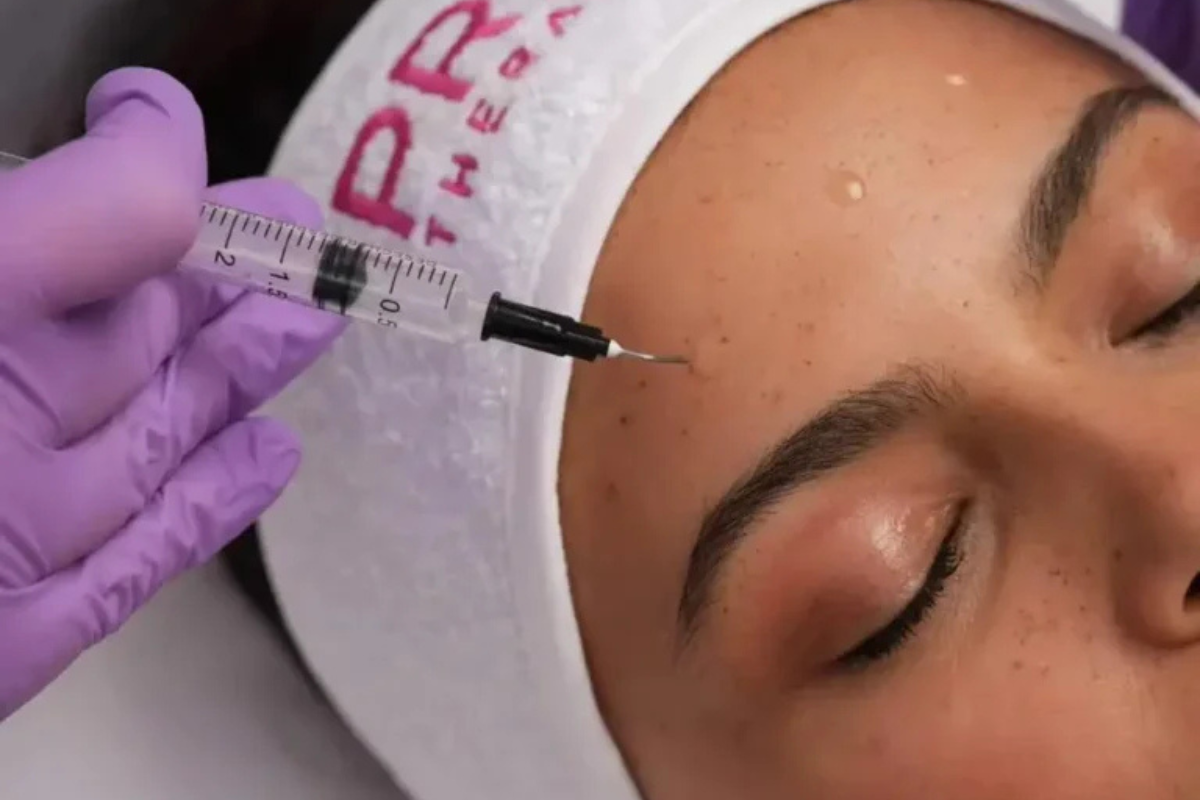
PRX Derm Perfexion, traditional chemical peels and microneedling are often grouped together as “skin rejuvenation,” but they work differently. PRX is a topical, needle-free professional treatment designed to improve firmness, elasticity and hydration without visible peeling. Chemical peels create controlled chemical exfoliation at varying depths. Microneedling uses needles to trigger collagen remodeling. This guide explains which problems each is best suited to—and where the limits are.
Medically reviewed by May Belle Fellenz, APRN, MSN, FNP-BC
Founder and Lead Medical Aesthetics Provider · Reviewed October 2026
THE FASTEST WAY TO CHOOSE
Glow and skin quality, surface pigment, indented scars, rough texture and active acne do not all call for the same procedure.
If your main goal is refreshed skin quality with little visible downtime, PRX may be attractive. If the concern is more superficial discoloration, roughness or acne-related congestion, a properly selected chemical peel may make more sense. If the concern is collagen remodeling, depressed acne scars or textural change, microneedling may be the stronger fit.
There is overlap, and sometimes a sequence of treatments works better than forcing one procedure to do everything.
Best known for: skin quality, firmness, elasticity, hydration, glow and selected tone/texture concerns—with no needles and little visible peeling.
Best known for: controlled exfoliation, dullness, uneven tone, selected acne, superficial pigment and rough surface texture. Downtime depends heavily on peel depth.
Best known for: collagen remodeling, facial acne scars, wrinkles, pores and uneven texture. It is a needle-based medical procedure with a different risk profile.
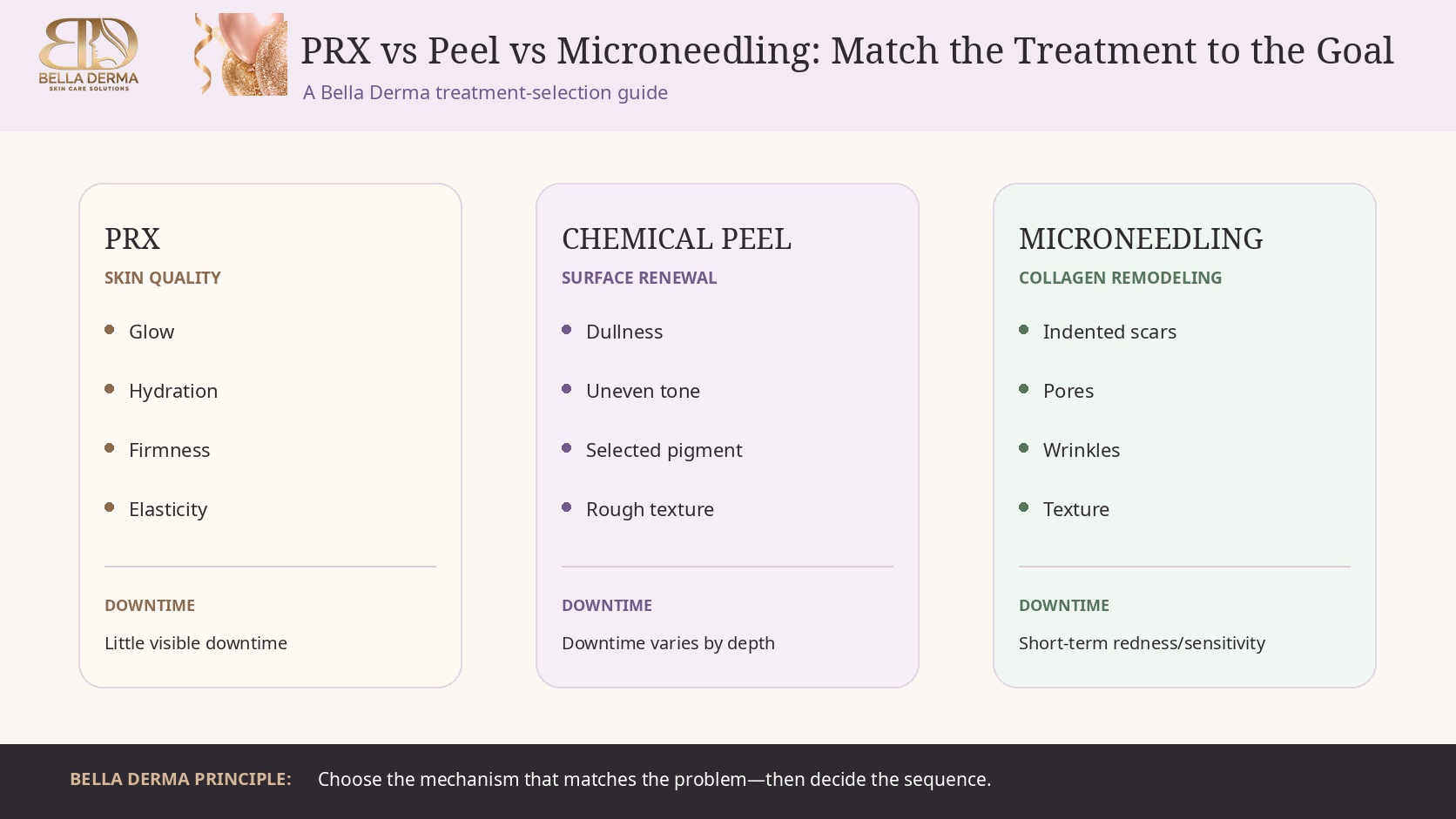
A quick guide to matching PRX, chemical peels and microneedling to the concern you are actually trying to treat.
PRX Derm Perfexion is not a conventional peel in the way most patients use that term. WiQo describes it as a professional, in-office, needle-free topical skin booster designed to improve the appearance of firmness, elasticity and hydration without visible peeling or downtime. WiQo also states that PRX Derm Perfexion uses a patented formulation with 33% TCA and hydrogen peroxide.
The practical point is that PRX is designed around skin biostimulation and visible skin-quality improvement rather than intentionally creating the surface peeling expected from many traditional chemical peels.
Official reference: WiQo — PRX Derm Perfexion · Learn more at Bella Derma: PRX Derm Perfexion in Reno · Compare traditional options on our chemical peels in Reno page
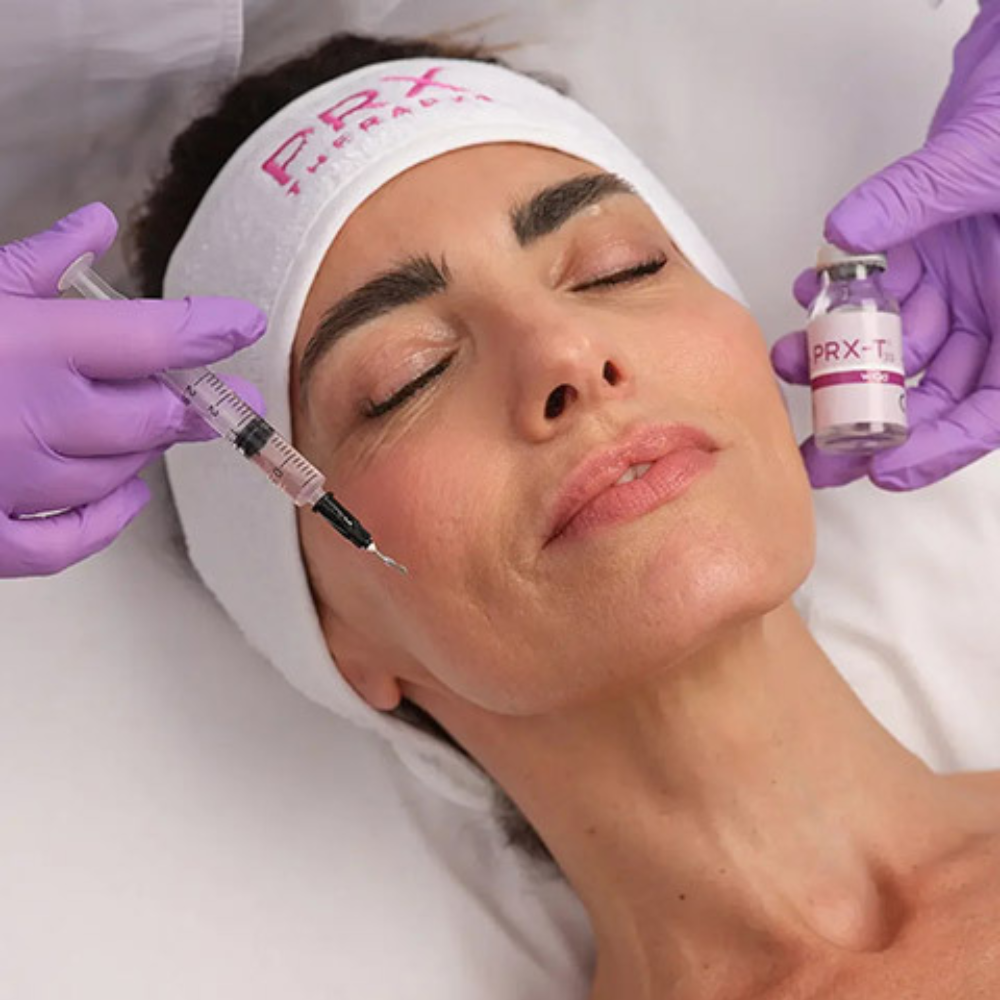
A chemical peel uses a chemical solution to create controlled exfoliation of the skin. Peels range from superficial to deeper treatments, and that depth changes both the potential benefit and the recovery. The American Academy of Dermatology notes that chemical peels can improve uneven color, dullness, fine lines, rough-feeling skin, sun damage and some types of acne.
This category is broad. A light peel with limited downtime and a medium or deep peel are not interchangeable treatments. The exact acid, concentration, pH, application time, skin preparation and patient selection all matter.
Ask which peel is being used, what depth is intended, how much downtime is expected, and what pigment risk applies to your skin tone.
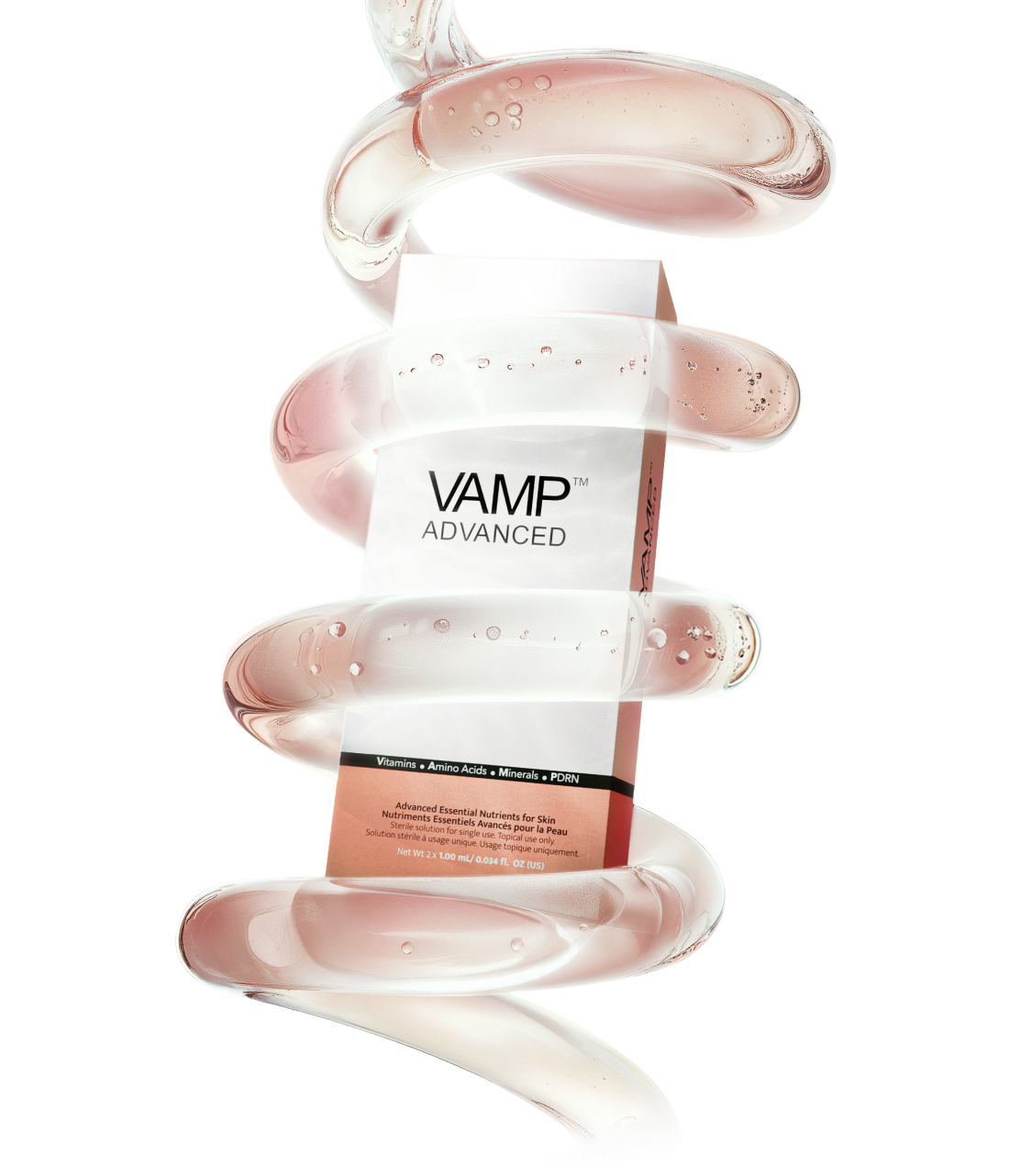
Microneedling uses small needles to create controlled punctures in the skin. The FDA has authorized certain microneedling devices for improving the appearance of facial acne scars and facial wrinkles in adults 22 and older, and the AAD describes microneedling as collagen-induction therapy because it stimulates the body’s wound-healing response.
That makes microneedling fundamentally different from both PRX and a peel. Instead of relying primarily on topical stimulation or surface exfoliation, it creates a controlled mechanical injury to drive collagen remodeling.
Related: VAMP Advanced Microneedling in Reno · Microneedling vs RF Microneedling
This is the more useful comparison than asking which treatment is “best.”
PRX often makes the most sense when the goal is refreshed, firmer-looking, more hydrated skin with minimal visible downtime.
A chemical peel may be useful when the concern is concentrated in the epidermis or superficial layers, especially when controlled exfoliation is the desired mechanism.
Microneedling may be a stronger fit because it directly targets collagen remodeling. Some scars still need additional modalities such as subcision, focal chemical treatment, laser or surgery.
A sequence may be better than one “hero” treatment. For example, active acne may need control first, pigment may need a separate strategy, and structural texture may be addressed later.
WiQo markets PRX Derm Perfexion as needle-free and without visible peeling or downtime. Temporary sensitivity can still occur, and post-treatment care matters.
Downtime depends on depth. AAD notes that light peels may heal quickly, while medium and deep peels can require meaningful recovery. Deeper does not automatically mean better.
Redness, tightness, tenderness, dryness, peeling or pinpoint bleeding can occur. Recovery depends on device, depth, passes and individual skin response.
No treatment should be chosen from skin tone alone. The AAD describes microneedling as usable across skin tones, but the FDA notes that some authorized microneedling devices were not studied in darker skin types and pigment changes can occur. Chemical peels can also be used in skin of color, but the AAD specifically warns that permanent pigment problems can occur if the provider lacks experience treating darker skin tones.
PRX is marketed by WiQo as suitable for all skin types, but that does not eliminate the need for individualized assessment. History of post-inflammatory hyperpigmentation, melasma, recent sun exposure, active irritation and current skincare all matter. See our Skin of Color in Reno guide for a deeper discussion of pigment risk.
For true depressed acne scars, microneedling usually has the clearest role of these three because collagen remodeling is central to the mechanism. Chemical peels can also help selected depressed scars and post-acne discoloration, depending on peel depth and scar type. PRX may improve overall skin quality and texture, but it should not be sold as a universal solution for tethered, deep boxcar or ice-pick scars.
The AAD emphasizes that acne-scar treatment often combines modalities because different scar types require different tools.
Related: Acne Scar Treatment in Reno · Acne Scars vs Acne Marks
PRX, chemical peels and microneedling each have different contraindications and risks. Peels can cause prolonged redness, pigment change, infection or scarring, especially when peel depth or aftercare is poorly managed. Microneedling can cause bleeding, bruising, pigment change, infection, reactivation of cold sores and other complications. PRX is less invasive, but it is still a professional treatment and should be matched to the patient’s skin condition and medical context.
The FDA states that microneedling devices have not been authorized for delivery of cosmetics, topical medications, vitamins, drugs or blood products into the skin. If a microneedling protocol includes a topical product, ask exactly how it is being used and what claims are being made about that combination.
A patient with active acne, dark marks and indented scars may need three different strategies at three different times. A patient with dull, dry, mildly lax skin may benefit from PRX without needing needles. A patient with surface congestion and pigment may benefit from a peel. The goal is to solve the dominant problem first and avoid stacking irritation simply because multiple treatments are available.
Bella Derma starts with the concern, skin tone, pigment history, acne activity, scar type, sensitivity, downtime tolerance and treatment history. PRX may be chosen for skin quality and glow. A chemical peel may fit selected superficial concerns. Microneedling may be chosen when collagen remodeling or structural texture is the priority.
Sometimes none of the three is the right first treatment. If vascular redness, active inflammatory acne, melasma, suspicious lesions or another concern is driving the problem, Aerolase, medical management, dermatology or another pathway may make more sense.
The treatment name matters less than whether its mechanism matches the problem.
No. PRX contains TCA, but WiQo positions PRX Derm Perfexion as a needle-free topical skin booster that does not create the visible peeling associated with many traditional chemical peels.
For true depressed acne scars, microneedling generally has a more direct collagen-remodeling role. PRX may improve overall skin quality but should not be expected to correct every structural scar type.
PRX is generally positioned as the lowest-downtime option. Light peels can also have limited downtime. Microneedling usually involves short-term redness and sensitivity, while deeper peels can require significantly more recovery.
Yes, but peel selection and provider experience matter. AAD warns that people with skin of color can develop permanent pigment problems when chemical peels are performed without appropriate expertise.
Some treatment plans may use both over time, but timing and protocol matter. Combining procedures should be based on skin condition, tolerance and a clear rationale rather than assuming more treatment is better.
There is no single default. Bella Derma recommends the option that best matches the patient’s concern, anatomy, skin type, pigment risk, downtime tolerance and treatment sequence. Explore our microneedling in Reno service guide for treatment planning, candidacy, recovery, and consultation details.
Medical note: This article is general education and does not replace individualized assessment. Chemical-peel depth, microneedling device settings, skin-tone considerations and treatment contraindications vary by patient and product.
CHOOSE THE MECHANISM THAT MATCHES THE PROBLEM
If you are unsure which treatment makes sense for your texture, pigment, scars, glow or downtime goals, start with a consultation and build the plan around the problem—not the trend.
Book Your Consultation